Mid-Autumn brings lanterns, lion dances, and family reunion to Hanoi, and nowhere in the city carries the festival quite like the Old Quarter, where Hang Ma Street turns into a wall of colour weeks before the full moon itself. The 2026 celebration falls on Friday the 25th of September, the 15th day of the eighth lunar month, and it plays out across shopping streets, museums, lakeside walks, and family tables rather than a single fixed event. This guide covers what the festival means, the best places to experience it in Hanoi, Hanoi Daewoo Hotel’s own mooncake collection for the season, practical tips, and where to stay.
Mid-Autumn Festival, known locally as Tet Trung Thu, falls on Friday, 25 September in 2026, corresponding to the 15th day of the eighth lunar month. Because the festival follows the lunar calendar, its Gregorian date changes each year. In Vietnam, Mid-Autumn is a cultural observance rather than a statutory public holiday, so offices, banks, public transport, and most attractions generally operate as usual.
The festival is closely associated with children, family gatherings, and the full moon. Vietnamese folklore also links the occasion to Chu Cuoi, a figure believed to sit beneath a banyan tree on the moon after being carried skyward by its roots, a story that is still commonly told to children. During the festival, children carry colourful lanterns and watch lion dances, while families share fruit, tea, and mooncakes.
Programmes at museums, shopping malls, hotels, and other venues are usually announced closer to the date, so it is best to check individual locations rather than expect one citywide programme.
Mid-Autumn in Hanoi begins well before the full moon, with the city gradually taking on a festive feel in the weeks leading up to the celebration. Many Hanoians start buying mooncakes around a month in advance, whether for gifting, family gatherings, or simply enjoying at home. As the festival approaches, lanterns, children’s toys, and colourful decorations begin appearing around the Old Quarter, while families make plans for evening outings, traditional performances, and time together.
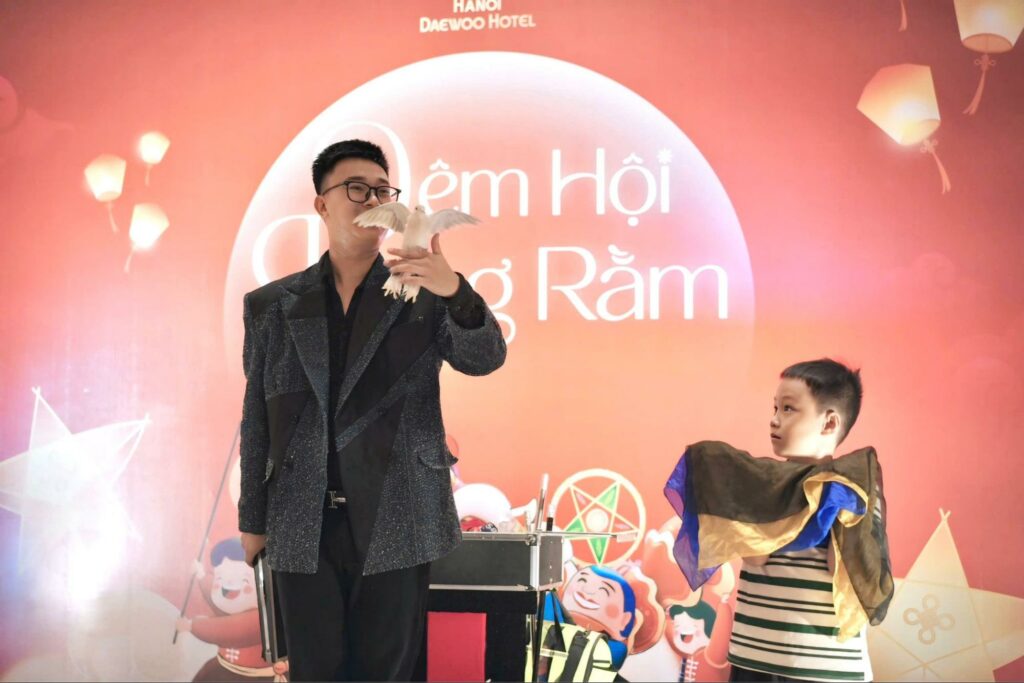
This seasonal tradition is also reflected in Hanoi’s hotels. In 2026, Hanoi Daewoo Hotel introduces its “Moonlit Magnolia” collection to mark its 30th anniversary, featuring a design inspired by magnolia blossoms beneath the Mid-Autumn moon.
The festival experience in Hanoi plays out across several settings, from a single dazzling shopping street to a quiet evening beside the lake, so families and couples find the pace that suits them.
Hang Ma Street is one of Hanoi’s historic 36 Old Quarter streets and has long been associated with the production and sale of paper goods, ceremonial items, and festive decorations. Stretching for roughly 300 metres, the street becomes especially vibrant in the weeks leading up to Mid-Autumn Festival, when its shopfronts are filled with colourful lanterns, traditional masks, lion heads, and seasonal toys. Evenings closer to the festival get considerably busier, so a late afternoon visit offers a good balance of daylight for photos and a more manageable crowd. Pair the walk with a visit to neighbouring Hang Luoc and Hang Dao streets to explore more of the Old Quarter’s festive atmosphere.
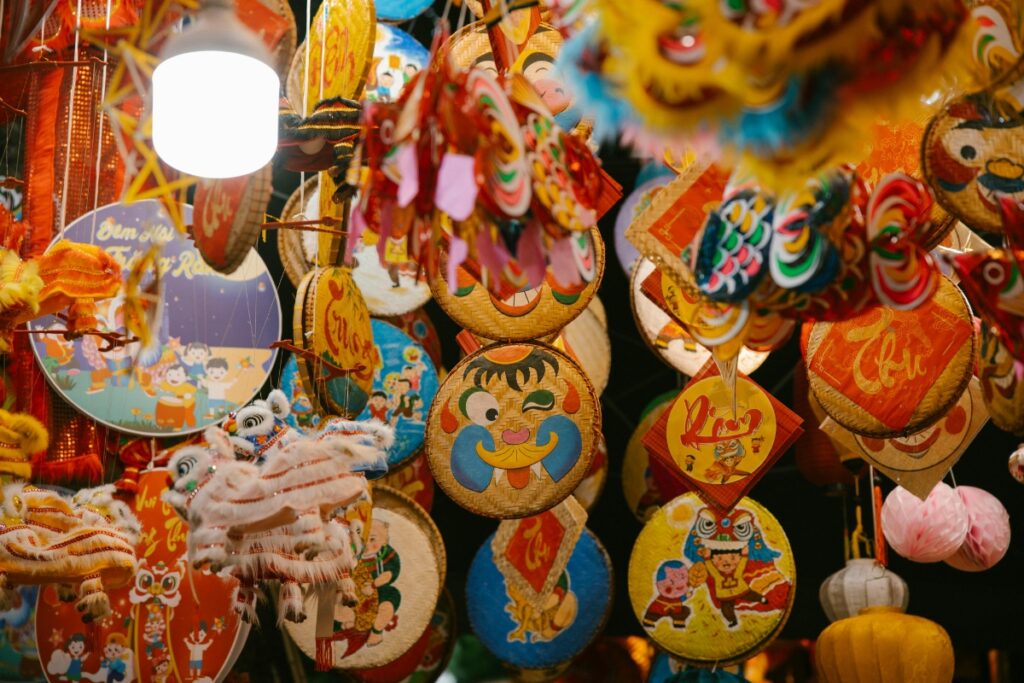
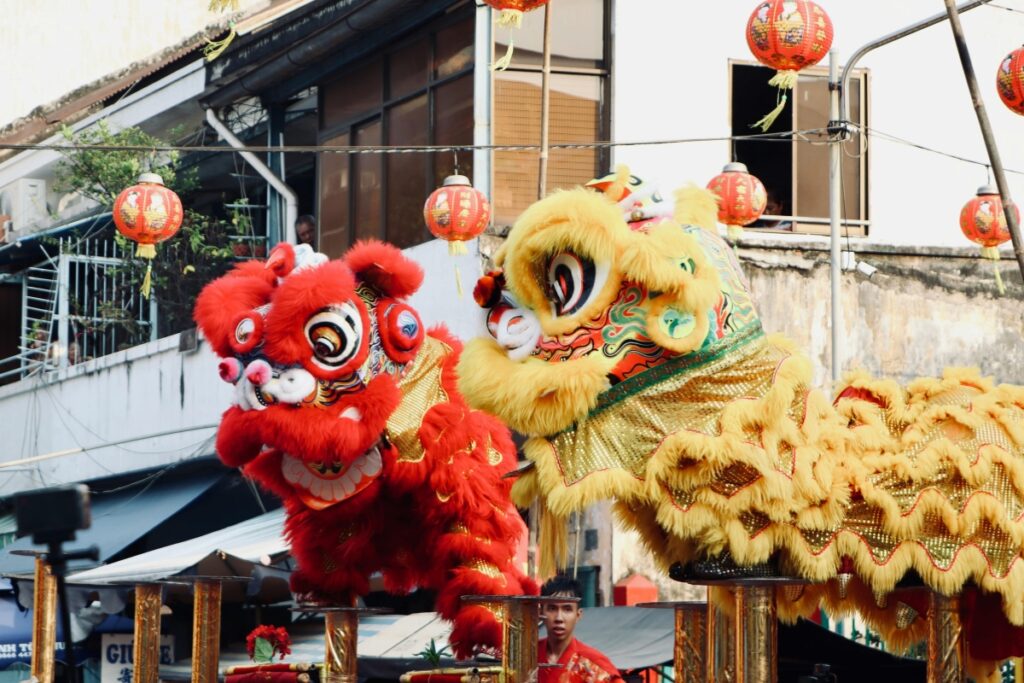
Lion dance troupes move shop to shop through the Old Quarter in the days around the festival, drums and cymbals announcing each stop before the lion, often paired with the grinning Ong Dia figure, performs for the gathered crowd. Performances are informal and unticketed, so timing depends on which troupe is working which street on a given evening, and asking a nearby shopkeeper is often the most reliable way to catch one. The energy and improvisation of a street performance make it feel more spontaneous than a scheduled show, though the crowd around each stop gets tight, so keep a firm hold on younger children.
The Vietnam Museum of Ethnology has built a genuine reputation for its Mid-Autumn programming, bringing in folk artisans to teach children how to make star lanterns, paper masks, and clay figurines, alongside lion dance performances and traditional water puppetry. Recent years have added STEM activities and a treasure hunt through the museum’s own collection, giving the day an educational layer beyond the crafts.
Entry runs around 40,000 VND, and the museum’s standing exhibits on Vietnam’s 54 ethnic groups make it a worthwhile stop even outside the festival programme. Because the specific 2026 schedule is confirmed closer to the date, treat any festival activity as a bonus and build the visit around the museum’s collection first.
Phung Hung Street’s permanent mural project, painted along the old railway arches, gets a seasonal layer of lanterns and festival decoration in the lead-up to Mid-Autumn, and the murals themselves depict scenes of old Hanoi that give the walk a quieter, more reflective character than Hang Ma a few streets over. It has hosted evening children’s programming and lantern parades in past years, run alongside the wider Old Quarter celebrations, though the exact schedule shifts annually. Even without a scheduled event, the murals lit against lanterns make this one of the better spots for photos, with noticeably thinner crowds than the main shopping streets.
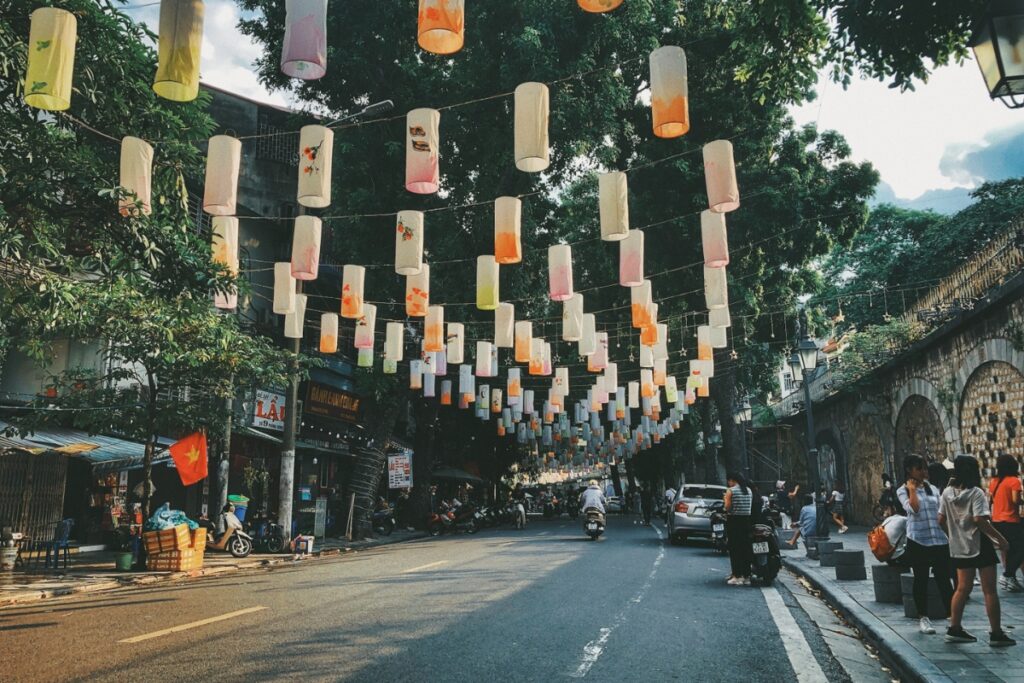
Hoan Kiem Lake sits within walking distance of both Hang Ma and the wider Old Quarter, making it a natural place to end an evening once the shopping and performances wind down. Ngoc Son Temple, reached by the red Huc Bridge, stays lit after dark and makes a scenic midpoint for photos with the lake behind it. Families with children often bring their own lanterns bought earlier at Hang Ma to carry along the lakeside path, a simple, low-key way to mark the festival that needs no ticket or fixed schedule. No ticket and no fixed schedule make this the most flexible stop on the list, easy to shorten or extend depending on how the rest of the evening has gone.
The Temple of Literature has hosted Mid-Autumn themed events and performances in past years, and even without a scheduled programme, its five courtyards and stone stelae offer a calmer, more historic counterpoint to the festival’s louder street celebrations. A morning or early afternoon visit here pairs naturally with an evening spent around Hang Ma and Hoan Kiem Lake, splitting the day between a quieter cultural stop and the festival’s livelier centre. Entry costs 70,000 VND for adults and 35,000 VND for students, and the grounds stay open on the festival date itself since Mid-Autumn is not a public holiday.
Hanoi’s largest covered market sits a short walk from Hang Ma, and in the weeks around Mid-Autumn its stalls carry the same lanterns, masks, and toys at prices that run a little lower than the more tourist-facing shopfronts nearby. The surrounding night market, open Friday through Sunday evenings, adds street food and, on Saturday evenings, occasional folk music performances that give the visit a different texture from a straightforward shopping stop. Combining a Dong Xuan visit with Hang Ma works well earlier in the day, before both areas fill with the evening crowds that build as the festival date approaches.
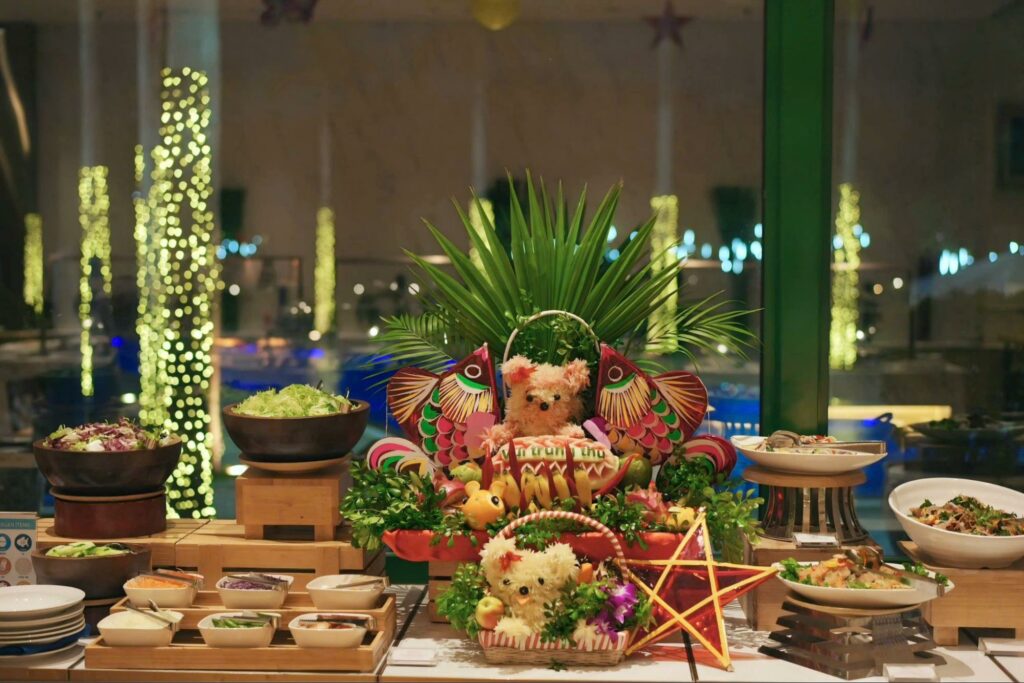
Café Promenade is the all-day dining restaurant inside Hanoi Daewoo Hotel, making it a convenient option for families staying at the hotel during the Mid-Autumn Festival. After a day of exploring Hanoi’s lantern-filled streets and festival activities, settle in for a special family dinner at the hotel without needing to travel elsewhere. The international buffet offers plenty for the whole family to enjoy, with dinner prices from VND 850,000 per adult and VND 425,000 per child, based on last year’s rates.
The buffet also makes the occasion easy for families with young children: children under 3 dine complimentary, while children aged 4 and under 1.4m receive the child rate; those measuring 1.4m and above are charged at the adult rate. After dinner, families can stay overnight at Hanoi Daewoo and turn the special meal into a more complete Mid-Autumn staycation.
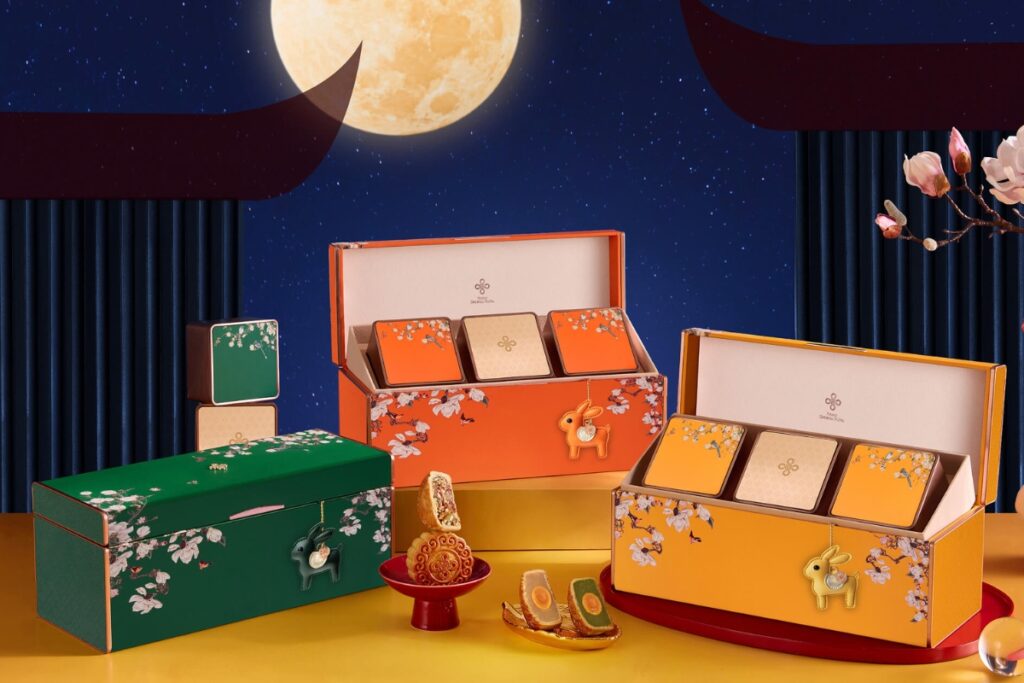
Mooncakes are a central part of Mid-Autumn celebrations in Hanoi, with traditional banh nuong (baked) often filled with lotus seed, mung bean, mixed nuts, or salted egg yolk. Hanoi Daewoo brings a modern touch to this tradition with its “Moonlit Magnolia” collection, pairing familiar flavours such as lotus seed and green tea with newer choices including cashew and mixed nuts.
Moonlit Magnolia marks Hanoi Daewoo Hotel’s 30th year in the city, a collection built around white magnolia blossoms lit beneath the Mid-Autumn moon and the idea of a gift passed between generations. The design carries that milestone forward: three colourways with an embossed magnolia motif, finished with a bespoke leatherette jade rabbit charm on every box. The flavour range moves in the same spirit, opening with the delicate lotus seed and green tea, running through chia seed and blueberry, and closing with the richer cashew nut and a sixteen-ingredient traditional mixed nuts blend new for 2026, giving one collection enough range to suit both a quiet family table and a bolder corporate gift.
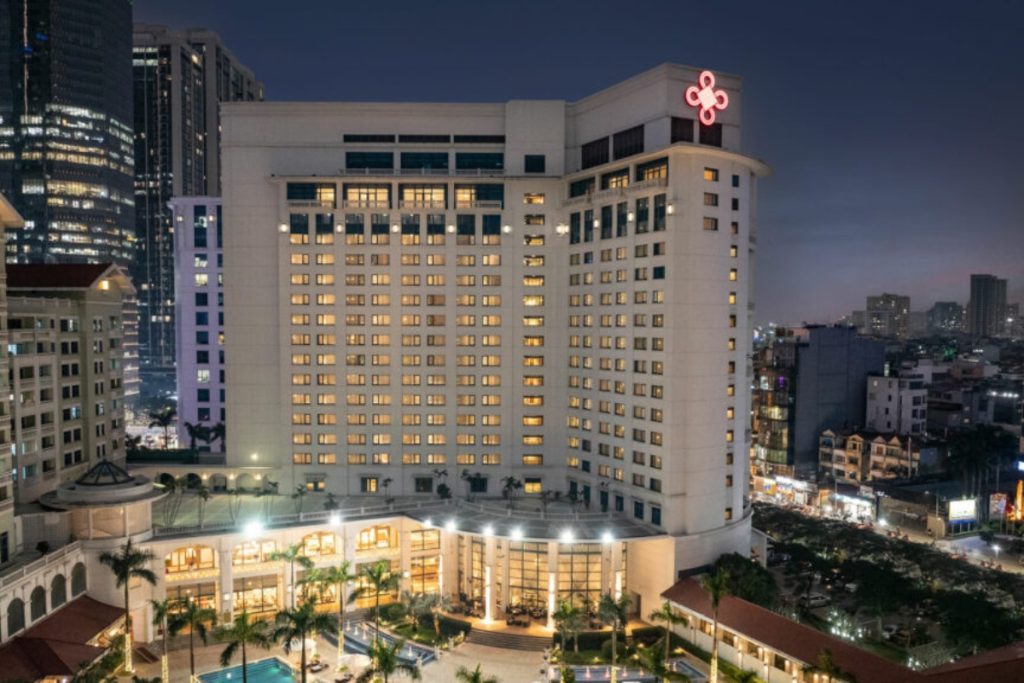
Hanoi Daewoo Hotel is located on Kim Ma Street in Giang Vo Ward, a short ride from Hang Ma Street, Hoan Kiem Lake, and the Temple of Literature, making it a practical base for the festival evening above. The hotel has 411 rooms and suites, six F&B outlets, a 65-metre outdoor pool, fitness centre, spa, and landscaped gardens, giving guests plenty of space to relax after an evening around the Old Quarter.
Room types:
Guests staying over the festival period can also order the “Moonlit Magnolia” mooncake collection directly through the hotel, making it easy to combine a Mid-Autumn stay with a gift to bring home or share with family during the visit.