Hanoi is a city of contrasts, where more than a thousand years of history and centuries-old landmarks meet tree-lined streets, vibrant neighbourhoods, contemporary cafés and one of Vietnam’s most distinctive culinary scenes. From the historic heart of Ba Dinh and the atmospheric Old Quarter to Hoan Kiem Lake and West Lake, the capital blends its rich heritage with a lively modern character, offering something for culture seekers, food lovers and first-time visitors alike.
Whether you have a few hours or several days to explore, read on to discover some of the best things to do in Hanoi and make the most of your time in the city.
From historic landmarks and cultural attractions to local food and unique city experiences, Hanoi offers plenty to explore for first-time visitors. The table below gives a quick overview of the top things to do, including opening hours, typical prices and who each experience is best suited to.
| Attraction / Experience | Opening Hours | Price | Best For |
| Ho Chi Minh Mausoleum Complex | Tue-Thu & Sat-Sun mornings (around 7:30 AM-11 AM); annual maintenance closure applies | VND 25,000 (about $1) for foreign visitors and free for Vietnamese people | First-time visitors, history lovers |
| Temple of Literature | Daily, 8 AM-5 PM | 70,000 VND adults; 35,000 VND students | Culture and history enthusiasts |
| Hoan Kiem Lake & Ngoc Son Temple | Open 24 hours | Free lake; around 30,000 VND temple entry | Walking, photography, local atmosphere |
| Hanoi Old Quarter | Open 24 hours; walking streets Fri-Sun evenings | Free entry; spending varies | Street food, shopping, first-time exploration |
| Thang Long Water Puppet Show | Multiple daily shows, usually afternoon and evening | 100,000-200,000 VND | Families, cultural experiences |
| Hanoi Street Food (Pho & Bun Cha) | Varies by vendor | Around 30,000-130,000 VND per dish | Food lovers and local experiences |
| Egg Coffee at Cafe Giang | Daily, 7 AM-10 PM | Around 40,000 VND | Coffee lovers and first-time visitors |
| Hoa Lo Prison | Daily, 8 AM-5 PM | Around 30,000-50,000 VND | History-focused travellers |
| St Joseph’s Cathedral | Exterior anytime; interior varies | Free | Architecture, quick sightseeing stops |
| Vietnam Museum of Ethnology | Usually 8:30 AM-5:30 PM; closed Mondays | Around 40,000 VND | Families and cultural learning |
| West Lake & Tran Quoc Pagoda | Pagoda around 7:30-11 AM & 1:30-5 PM | Free | Quiet walks, scenic views |
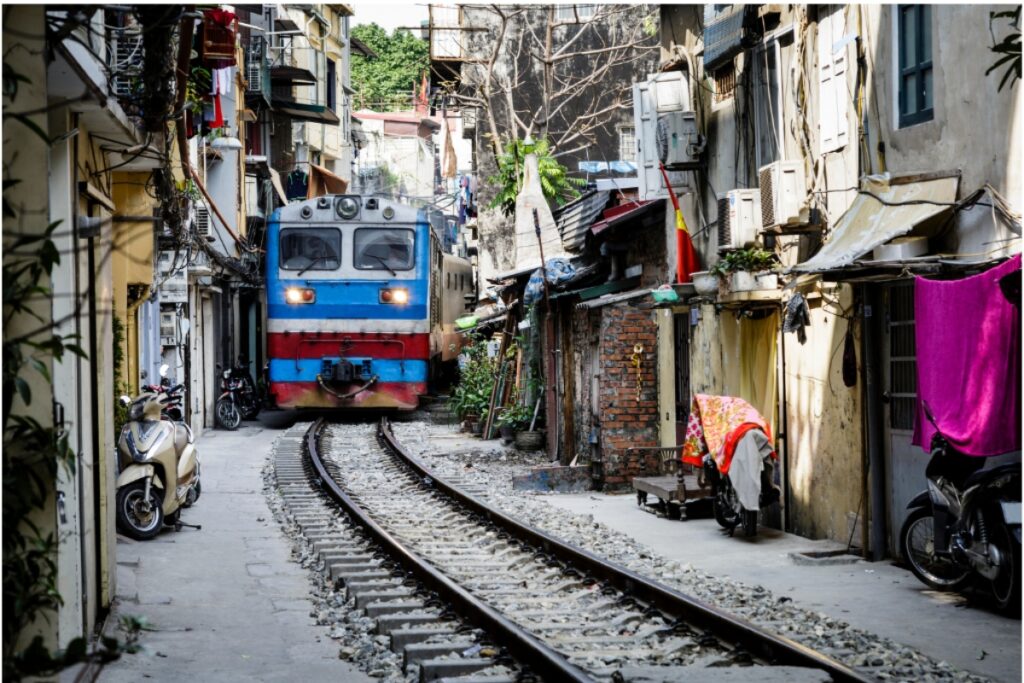
| Hanoi Train Street | Train times vary; cafe access varies | Usually the cost of a drink | Photography and unique experiences |
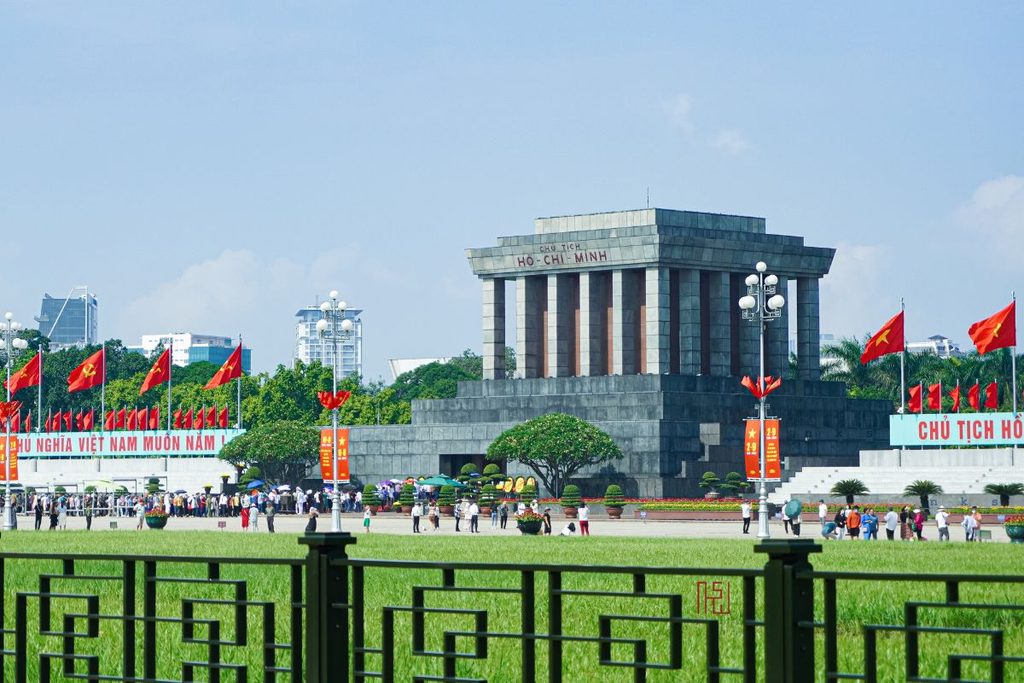
Ho Chi Minh Mausoleum sits at the centre of Ba Dinh Square, where Ho Chi Minh read Vietnam’s Declaration of Independence in 1945, and the daily flag ceremony, raised at 6 AM and lowered at 9 PM, still draws a steady crowd of locals and visitors. The complex also holds Ho Chi Minh’s simple stilt house, the Presidential Palace grounds, the Ho Chi Minh Museum, and the wooden One Pillar Pagoda, built to resemble a lotus rising from water. The mausoleum’s interior closes for annual maintenance for 2 to 3 months most years, so confirm current status before planning a visit around it specifically, and dress with shoulders and knees covered throughout the complex.
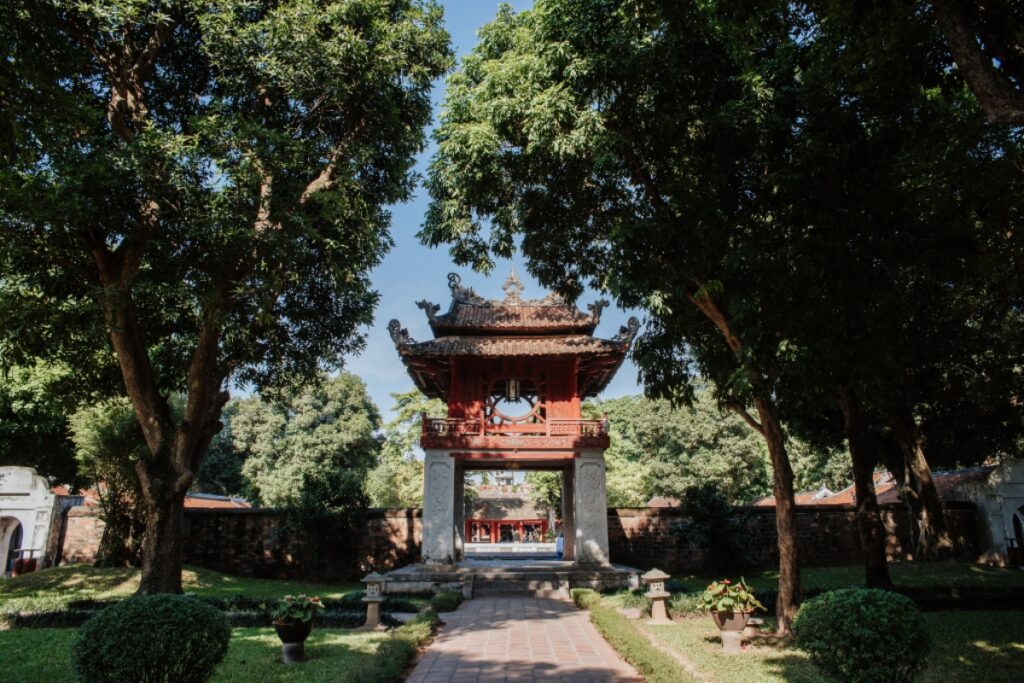
Founded in 1070, the Temple of Literature is one of Hanoi’s most significant historic landmarks. In 1076, the Imperial Academy (Quốc Tử Giám) was established within the complex and is widely regarded as Vietnam’s first national university. Today, its courtyards, traditional architecture and stone stelae offer visitors a fascinating glimpse into Vietnam’s long tradition of scholarship and education.
Hoan Kiem Lake sits at the meeting point of Hanoi’s Old Quarter and French Quarter, and mornings here bring out locals doing tai chi, shuttlecock games, and group dance sessions along the water. Ngoc Son Temple, reached by the red Huc Bridge on the lake’s north side, honours General Tran Hung Dao and makes a natural midpoint for a walk around the water. No ticket is needed for the lake itself, and the surrounding streets fill with flags, food stalls, and a genuinely local crowd rather than a purely touristic one, especially early in the morning.
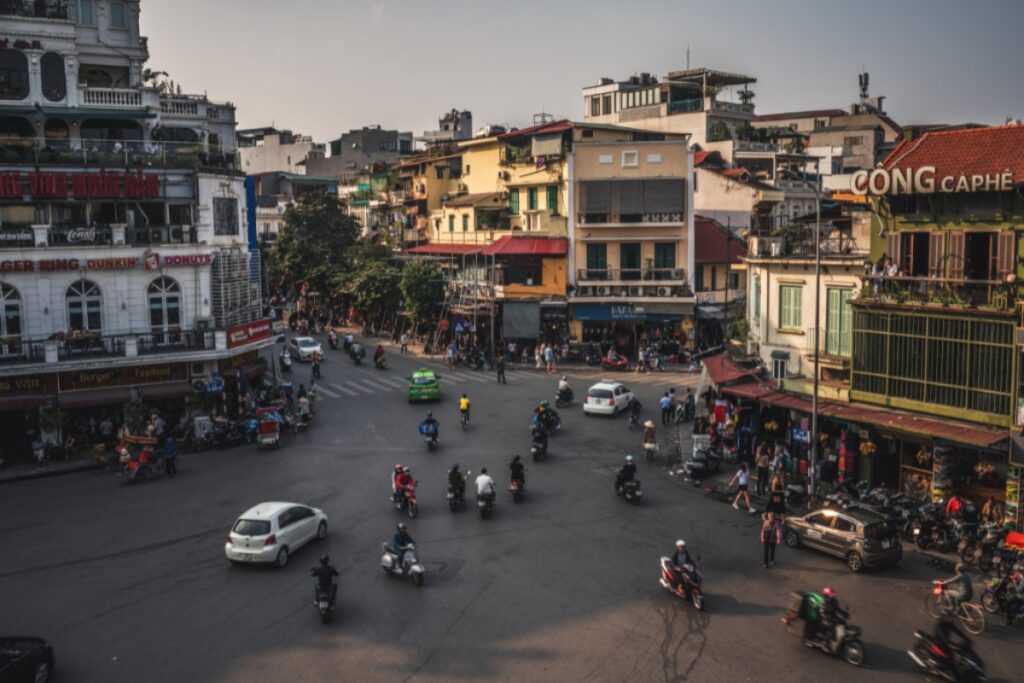
Hanoi’s Old Quarter groups 36 streets, each historically tied to a single trade: silver on one street, silk on another, and the layout still shapes what is sold where today. On Friday, Saturday, and Sunday evenings, several streets close to traffic and turn into a walking market with street performers, live music, and food stalls, centred on Hang Dao Street near the lake’s north end. Ta Hien Street, a few minutes in, is the centre of Hanoi’s bia hoi scene, fresh draft beer served in small plastic cups for well under a dollar, a genuinely social way to end a day of sightseeing.
Water puppetry began over 1,000 years ago in the flooded rice paddies of northern Vietnam, and the Thang Long Water Puppet Theatre, a few minutes from Hoan Kiem Lake, stages it daily using wooden puppets controlled from behind a bamboo screen by puppeteers standing waist deep in water. The 50-minute shows run through 18 traditional scenes, farming, fishing, dragon and phoenix legends, and the Legend of the Restored Sword tied directly to the lake outside, accompanied by a live orchestra playing traditional instruments. No language skills are needed to follow along, and Saturday evening and Sunday shows sell out a few days ahead, so book in advance for a weekend visit.
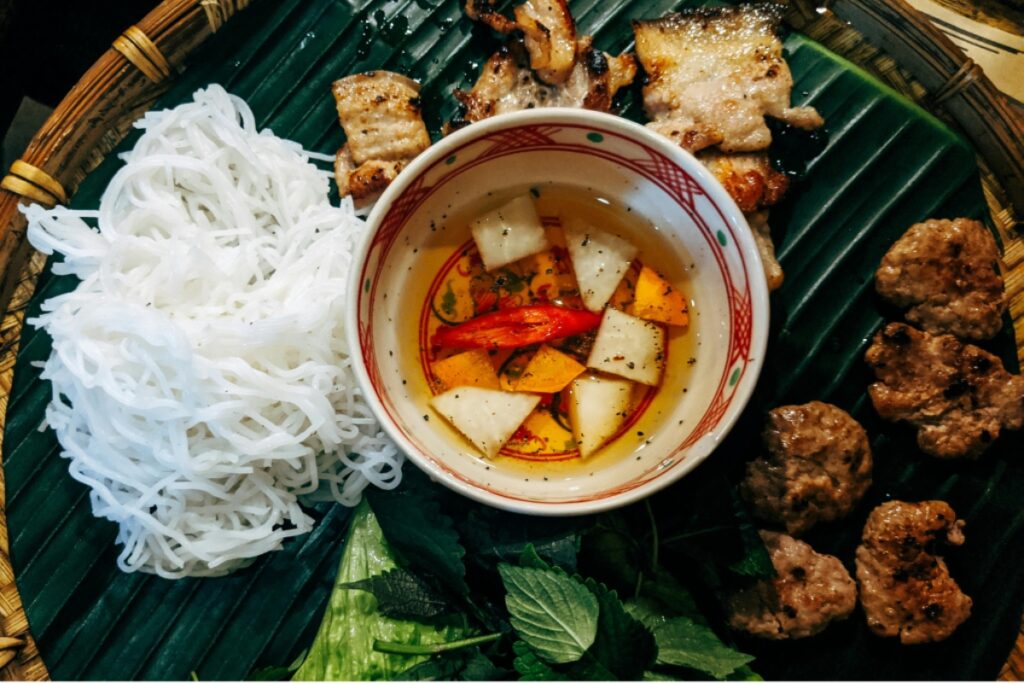
Pho, Vietnam’s beef noodle soup, and bun cha, grilled pork with rice noodles and herbs, both originate from Hanoi rather than further south, and both are best eaten from a small kitchen with a handful of plastic stools rather than a formal restaurant. Pho 10 Ly Quoc Su, holder of a Michelin Bib Gourmand recognition, serves 10 beef pho variations from a compact corner kitchen, while Bun Cha Huong Lien became internationally known after Anthony Bourdain shared the dish here with President Barack Obama in 2016. Expect to queue at both during peak hours, and to pay in cash.
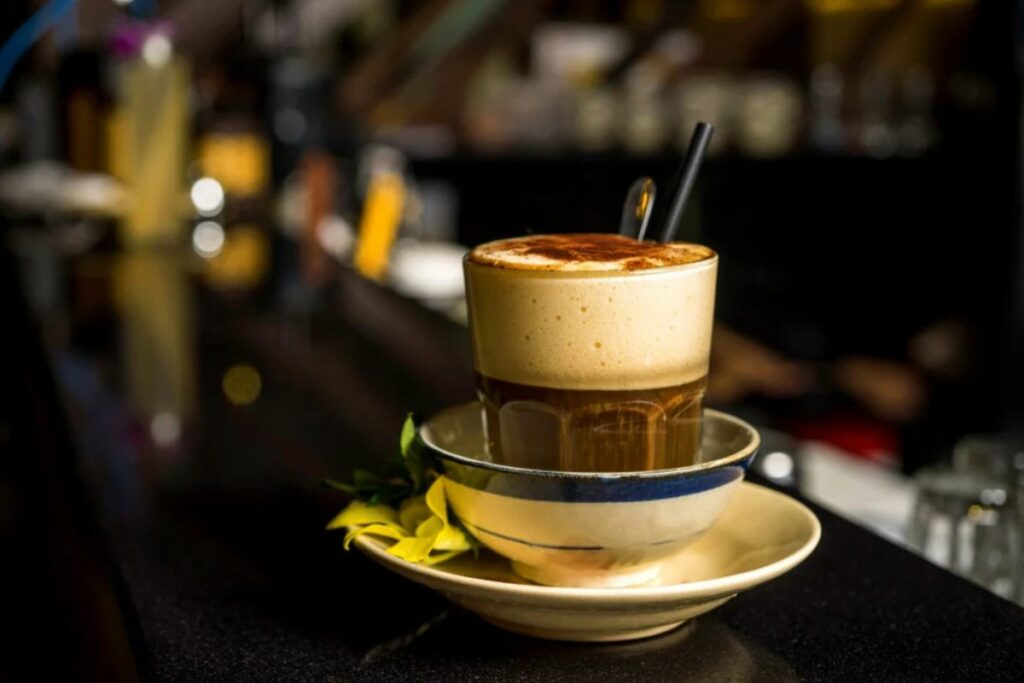
Egg coffee whisks egg yolk, condensed milk, and butter into a thick, meringue-like layer over Vietnamese coffee, and it was invented at Cafe Giang in 1946 during a period when fresh milk was scarce in the city. The current cafe, run by the founder’s descendants, sits down a narrow alley off Nguyen Huu Huan Street, with small stools and low tables that have barely changed in decades. Order it hot rather than iced for the version most regulars prefer, and treat it as a dessert as much as a drink; it is rich enough to share.
Built by French colonial authorities in 1896 to hold Vietnamese political prisoners, Hoa Lo Prison later held American pilots during the Vietnam War, who nicknamed it the Hanoi Hilton, a name the museum itself now references. Only a fraction of the original site remains; the rest was redeveloped, but the surviving cell blocks, exhibits, and reconstructions give a direct, occasionally graphic account of both periods. An audio guide adds context beyond the wall text, and 1 to 2 hours is a realistic amount of time to see the exhibits properly rather than rushing through.
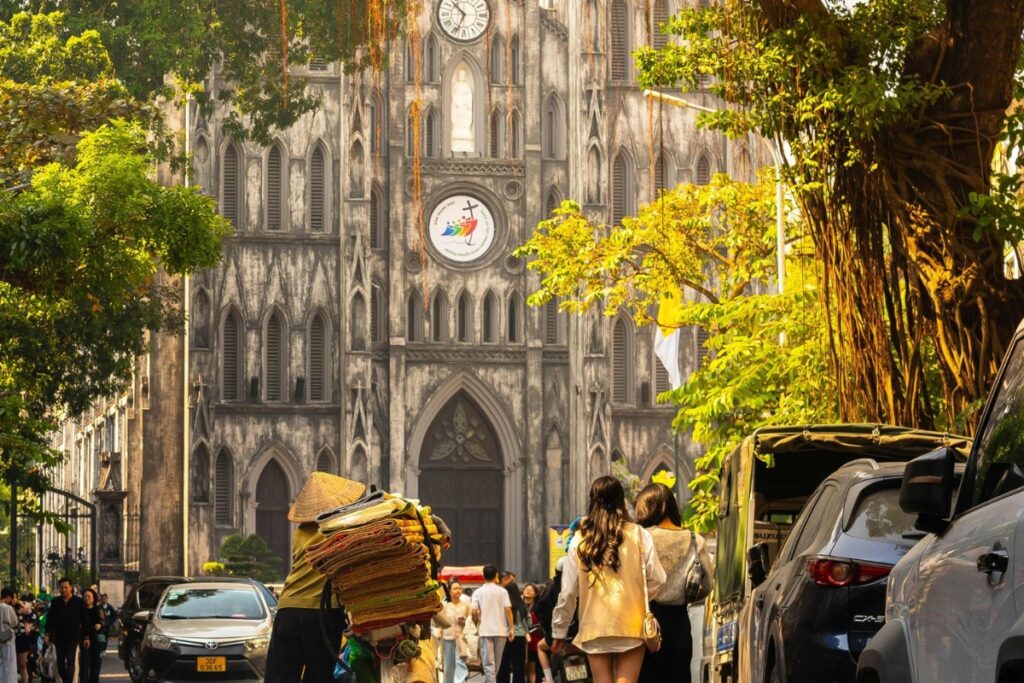
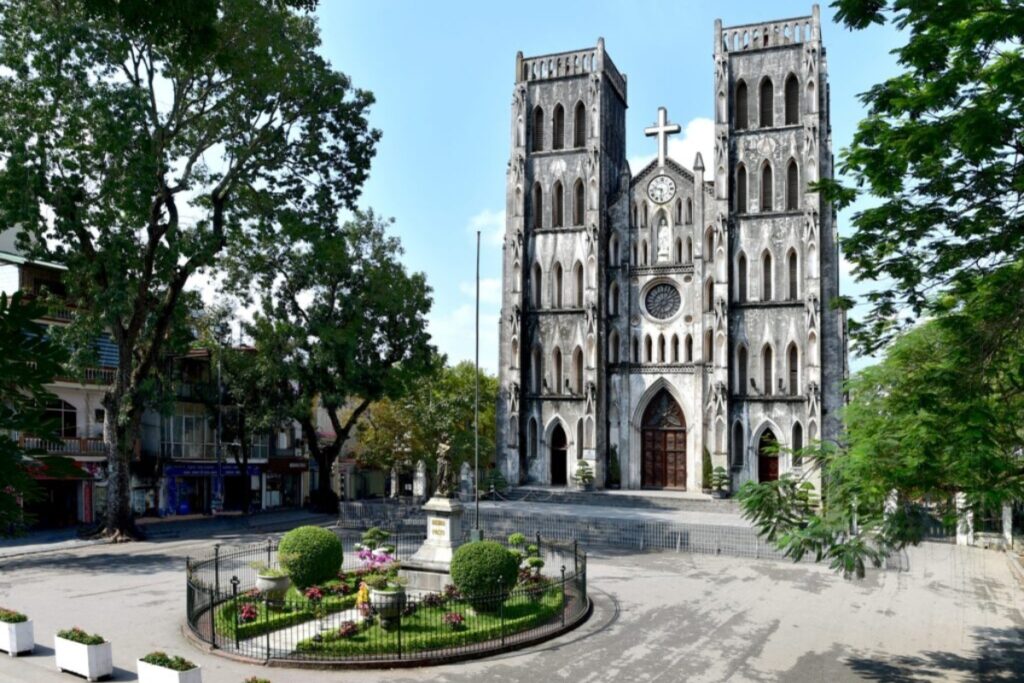
Completed in 1886, St Joseph’s Cathedral was one of the first major buildings the French colonial government put up in Hanoi, and its twin Gothic Revival towers and stained glass have led more than one visitor to compare it to a smaller Notre Dame. The interior is only open outside mass times on a limited schedule, so the exterior and the small square in front, a long-running local gathering spot for lemon tea and a coffee break, are the more reliable part of a visit. It sits an easy walk from Hoan Kiem Lake, making it simple to fold into the same outing.
The Vietnam Museum of Ethnology documents Vietnam’s 54 recognised ethnic groups through indoor galleries and an outdoor park where full-scale traditional houses, including a tall Bahnar communal house and stilted Tay dwellings, can be walked through rather than viewed behind glass. Weekend and holiday programming has included folk artisans teaching lantern making and traditional crafts, alongside water puppetry performances. A visit runs 1 to 2 hours for the indoor galleries alone, longer if the outdoor architecture park is included, and it works well as a rainy day option given how much of the museum is under cover.
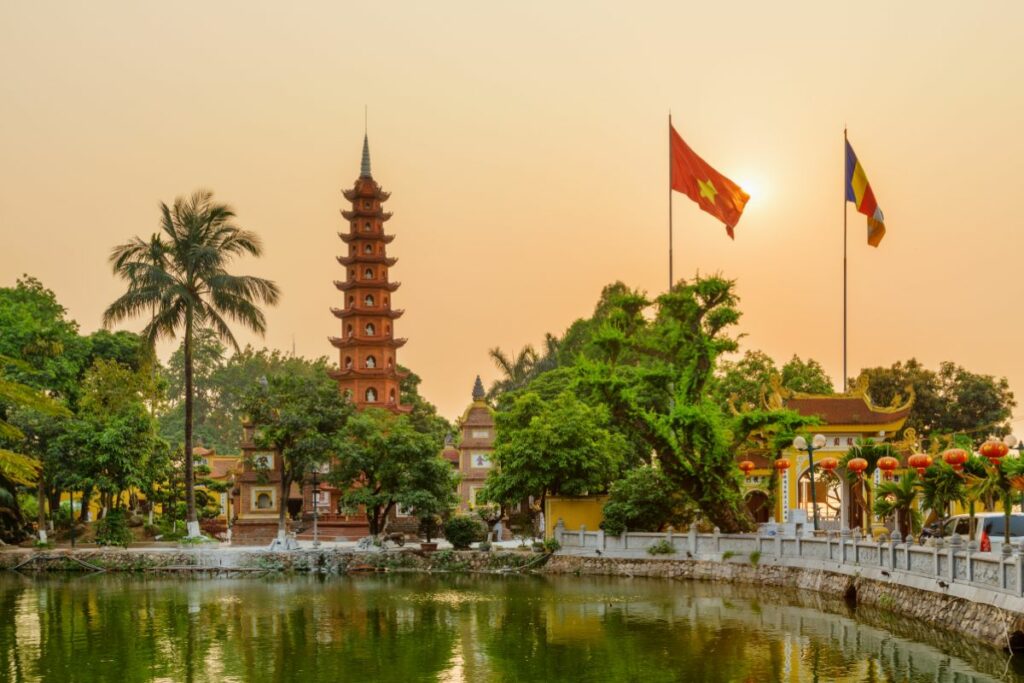
Tran Quoc Pagoda has stood on a small islet in West Lake for more than 1,500 years, making it the oldest Buddhist temple in Hanoi, and its 11-story Lotus Tower and Bodhi tree, grown from a cutting gifted by India in 1959, reward the short walk out to the causeway. Thanh Nien Road, the causeway connecting West Lake to Truc Bach Lake, makes a pleasant walk in either direction, and the wider Tay Ho area around it moves at a noticeably slower pace than the Old Quarter, with a growing scene of lakeside cafes.
Hanoi’s Train Street, where an active railway runs within a metre or two of houses and cafes, has been repeatedly opened and closed to tourists since 2019 over safety concerns, and organised group tours have been banned since March 2025. As of 2026, it remains accessible in places, but only through cafes with permission to host visitors, rather than standing freely on the tracks, and which sections are open can change without warning. If visiting, arrange it through a licensed cafe rather than showing up expecting open access, and never stand on the tracks or step out when a train is announced.
A little planning around timing, transport, and the weather makes a Hanoi trip run considerably smoother.
Hanoi Daewoo Hotel, located beside Thu Le Lake, puts most of the attractions on this list within a short ride, close enough to the Old Quarter, Ba Dinh Square, and West Lake to build a multi-day Hanoi itinerary around one base.
What we offer:
Planning your Hanoi itinerary? Book your stay at Hanoi Daewoo Hotel and enjoy a convenient base